Application Note
Nightfall-HR Maritime Imaging Trial: Vessel imaging using a scientific CMOS camera and commercial telescope optics
Nightfall-HR Maritime Imaging Trial: Vessel imaging using a scientific CMOS camera and commercial telescope optics
Photonic Science is a leading manufacturer of advanced scientific imaging solutions, offering a comprehensive portfolio that includes SCMOS, SWIR/InGaAs, X-ray cameras and Laue diffraction systems.
In this evaluation, conducted in June 2026, the low-light optimised Nightfall-HR SCMOS camera was used to image a variety of marine vessels during dawn and dusk, and under challenging coastal low-light conditions.
Combining the exceptional sensitivity, low noise performance, and high dynamic range of the Nightfall-HR with commercially available telescope optics provided an effective solution for imaging distant targets in demanding surveillance environments. The results demonstrate the capability of the system to deliver high-quality imagery where conventional imaging technologies often struggle.
In addition to its standard product range, Photonic Science specialises in the development of bespoke and OEM imaging solutions, enabling systems to be tailored to meet the specific requirements of challenging operational environments and customer applications.
Test Configuration
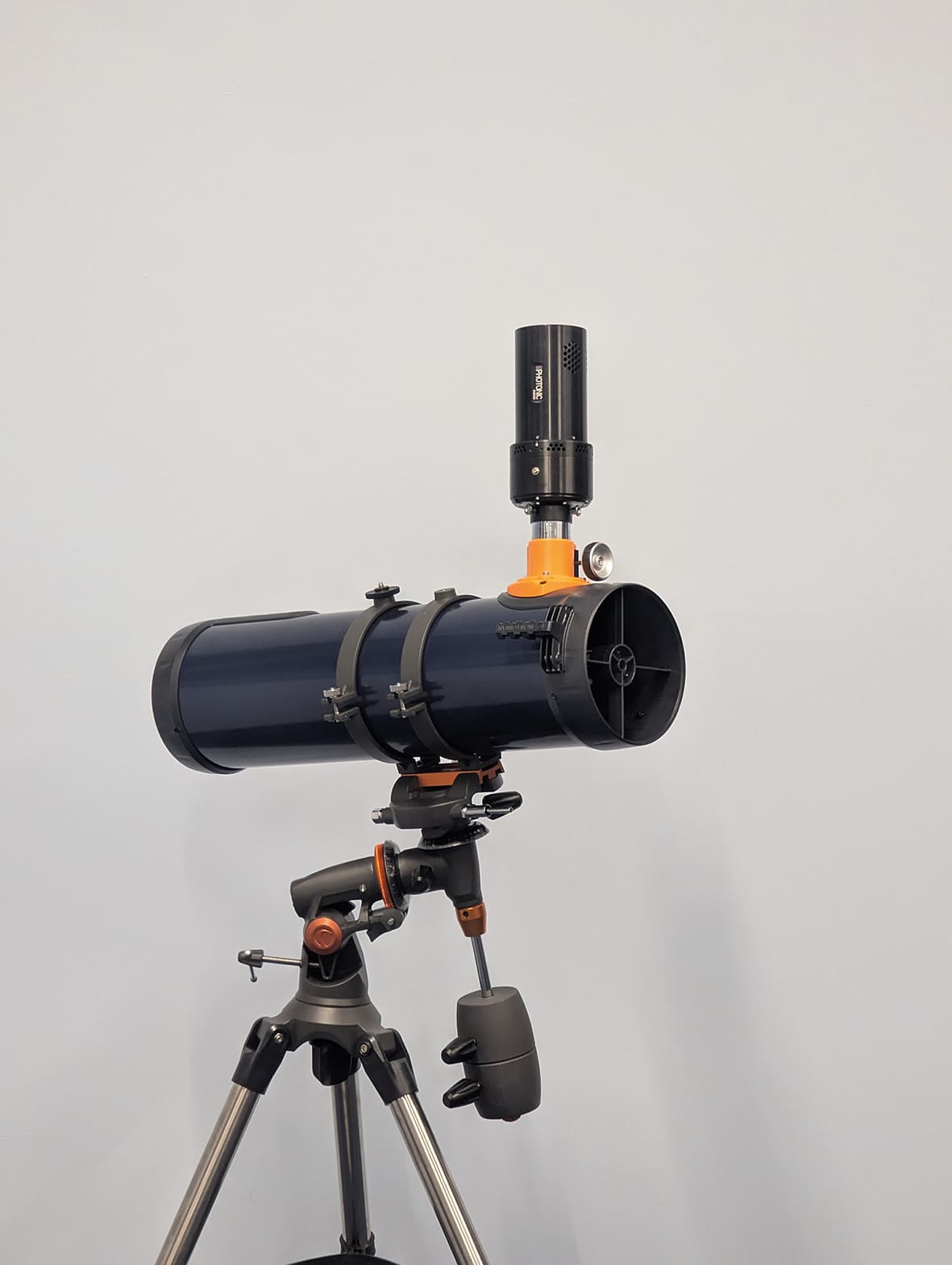
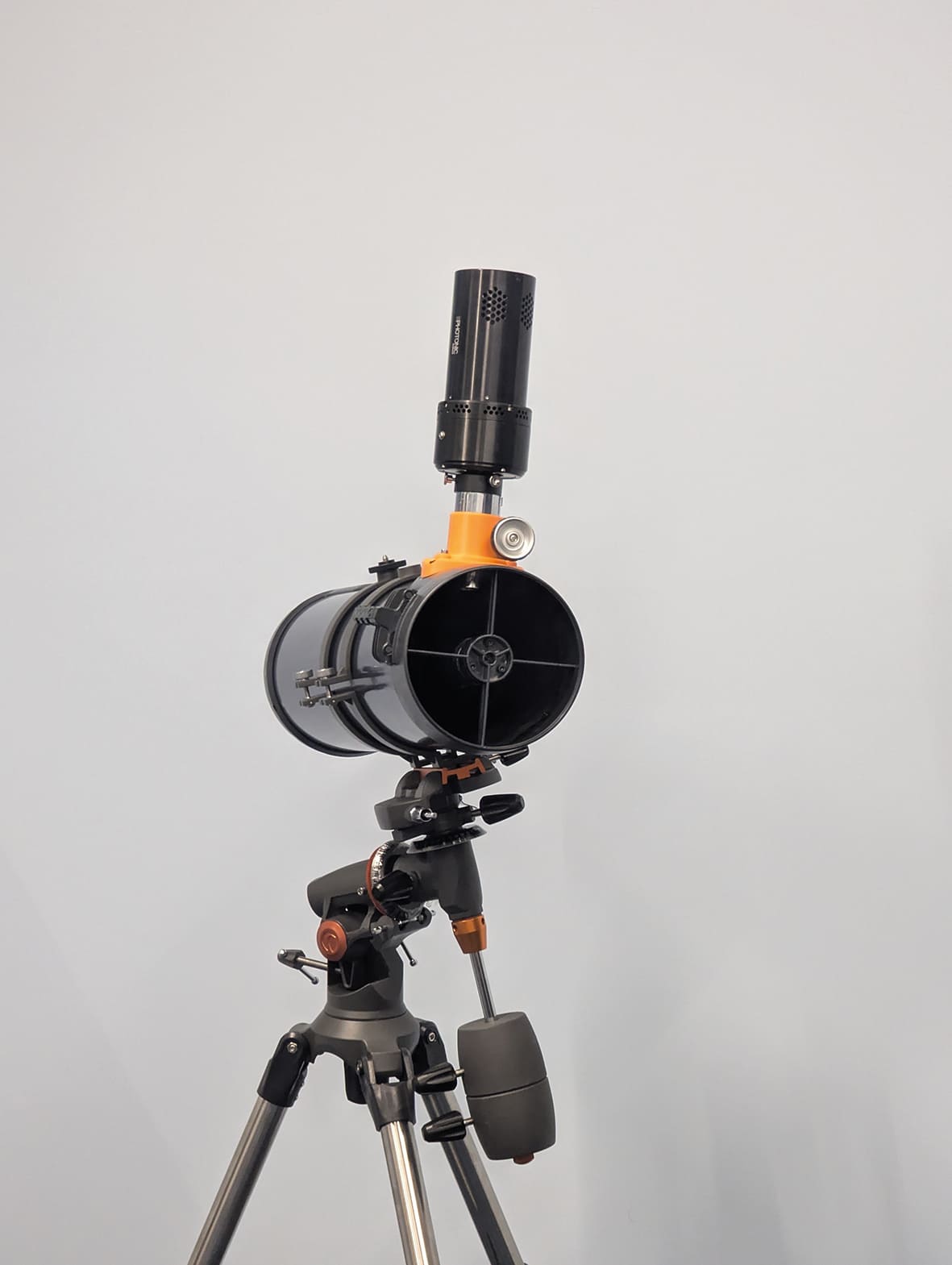
The camera was operated at prime focus on the telescope. The configuration was deliberately simple, providing a realistic baseline rather than an optimised surveillance payload.
Parameter
Trial Configuration
Camera System
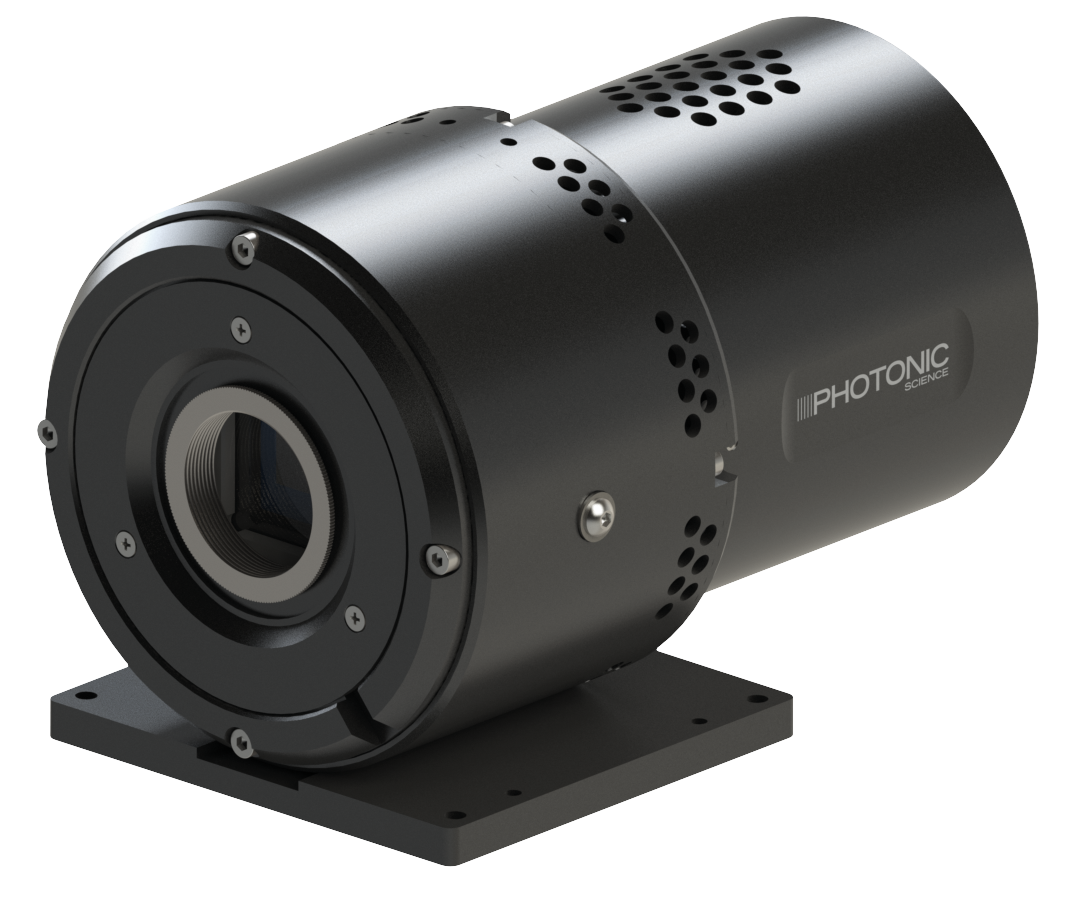
Nightfall-HR camera
Sensor
Back-side-illuminated scientific CMOS sensor
Optical System
Commercial 130 mm Newtonian reflector
Nominal Focal Length
650 mm
Configuration
Prime focus
Focusing and Tracking
Manual
Location
Folkestone, United Kingdom
Observation Environment
Dover Strait maritime coastal conditions
Image Processing
Direct-capture; no Al enhancement, no image stacking, and no super-resolution
Trial Equipment Setup
Nightfall-HR with
130 mm Newtonian telescope
Executive Summary
Photonic Science conducted a maritime imaging trial using the Nightfall-HR camera coupled to a commercially available 130 mm Newtonian telescope.
The objective was to assess practical long-range vessel observation under real coastal conditions, using a deliberately simple optical configuration representative of an early field- evaluation setup rather than an optimised surveillance payload.
Testing was undertaken from Folkestone, UK, overlooking the Dover Strait. The trial used manual focusing, manual target acquisition and direct image capture. No image stacking, artificial intelligence enhancement or postcapture super-resolution processing was used for the images presented in this report.
The images were assessed using a qualitative DORI framework- Detection, Observation, Recognition, and Identification – as defined in International Standard IEC EN 62676-4.
The original objective was to demonstrate useful maritime imaging performance at approximately 10 km. The trial met and exceeded that objective. Positive vessel identification was achieved on nearby targets, while vessel recognition and traffic observation were demonstrated at operationally meaningful ranges in the Dover Strait shipping lanes.
The results show that Nightfall-HR can support maritime observation, coastal monitoring and long-range surveillance applications using a simple optical configuration.
The dominant practical limitation observed during the trial was atmospheric degradation from haze, sea path turbulence that obscured detail and reduced target contrast, rather than detector sensitivity.
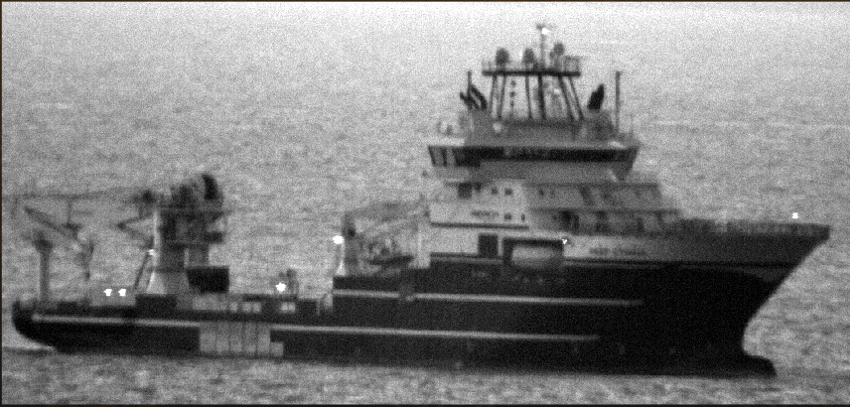
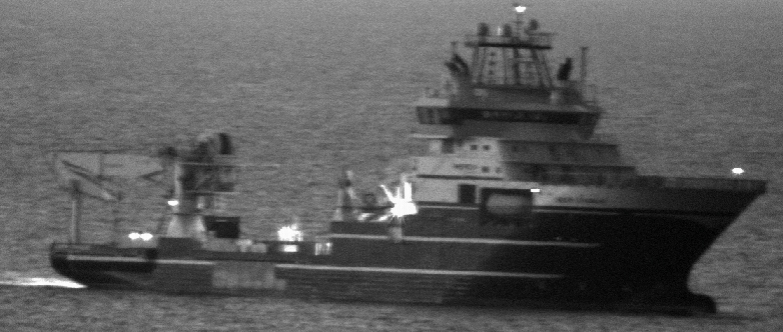
Figure 1: 122 m offshore support vessel observed at dawn from Folkestone, approximately 5.8 km from the imager. The image demonstrates detailed vessel observation under real coastal conditions at early dawn (04:00 local time, 1 June 2026)
Observed Results
Detailed vessel observation
A 122 m offshore support vessel provided the strongest close-range example from the trial. At a range of 5.8 km, the image shows vessel geometry, bridge structure, deck equipment and crane features. This supports positive vessel identification and demonstrates the level of structural detail available under dawn conditions. Image enhancement techniques outside the scope of this trial may improve legibility further (denoising, stacking and averaging) and would have allowed a more direct determination of the vessel’s name.
Longer-range traffic observation: bulk cargo carrier and background traffic
The bulk carrier image demonstrates observation of a larger merchant vessel in a more challenging maritimescene. The vessel outline and scale are clearly visible while additional background targets indicate the practical value of the system for wider traffic observation.
Commercial ferry observation
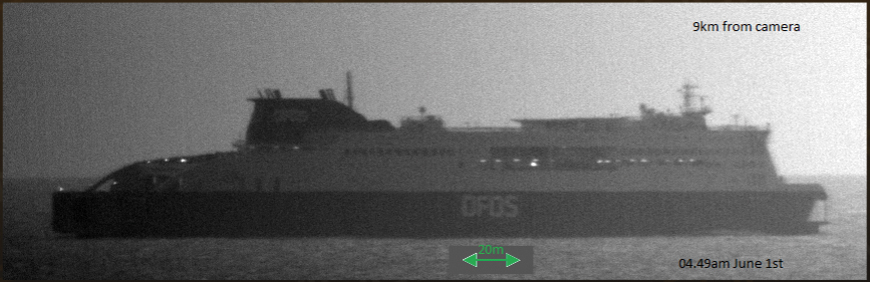
A large RoPax ferry was imaged during the trial with the vessel profile, superstructure and branding visible. This image is valuable because it presents an immediately recognisable target type and demonstrates practical vessel classification under maritime haze conditions.
Identification of heavy shipping
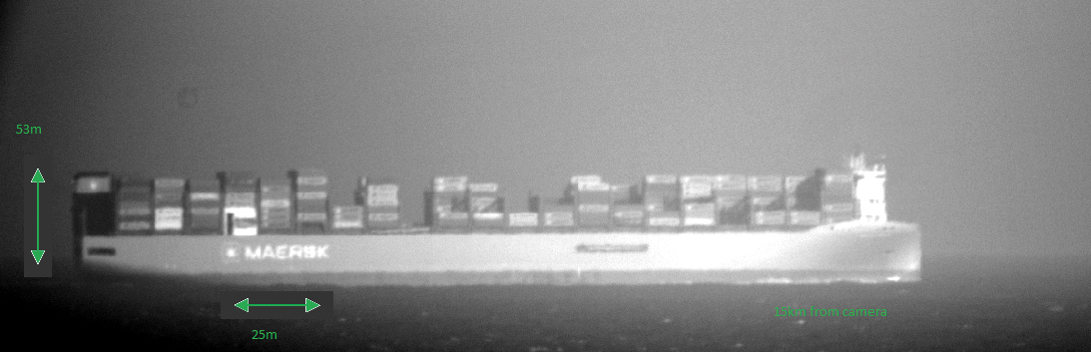
Identification of a 350 m container ship at approximately 15 km from the camera. Note clear retention of the livery, bow shape and superstructure position despite the low- contrast sea path and direct-capture imaging method. While the vessel’s physical size makes detection expected, the image demonstrates practical long-range recognition and identification using Nightfall- HR with modest commercial optics under real coastal atmospheric conditions.
Multiple vessels in one field of view
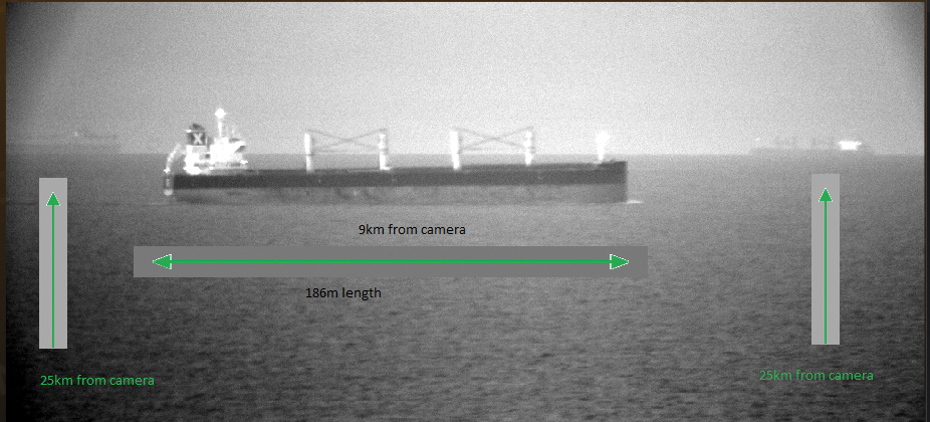
One of the most useful outputs from the field trial was the capture of three vessels in the same scene. This image illustrates more than target detection: it shows that Nightfall-HR can provide useful situational context, with nearby detailed vessel observation and longerrange background traffic in a single field of view.
Range estimation for the three-vessel image
The midground general cargo vessel was positively identified from supporting web evidence and vessel geometry, and the same geometry-based estimate of range was made for the positively identified offshore support vessel. The calculation is approximate
because the background vessel is degraded by haze and is less sharply defined; also it may not be exactly broadside to the camera. It is nevertheless useful as a sanity check against the Dover Strait shipping lane geometry.
This estimate is consistent with a vessel located in the more distant Dover Strait traffic lane rather than an extreme-range target. The important conclusion is therefore not an exceptional maximum range claim, but that the system captured identifiable vessel traffic at useful maritime ranges using modest optics and direct image capture.
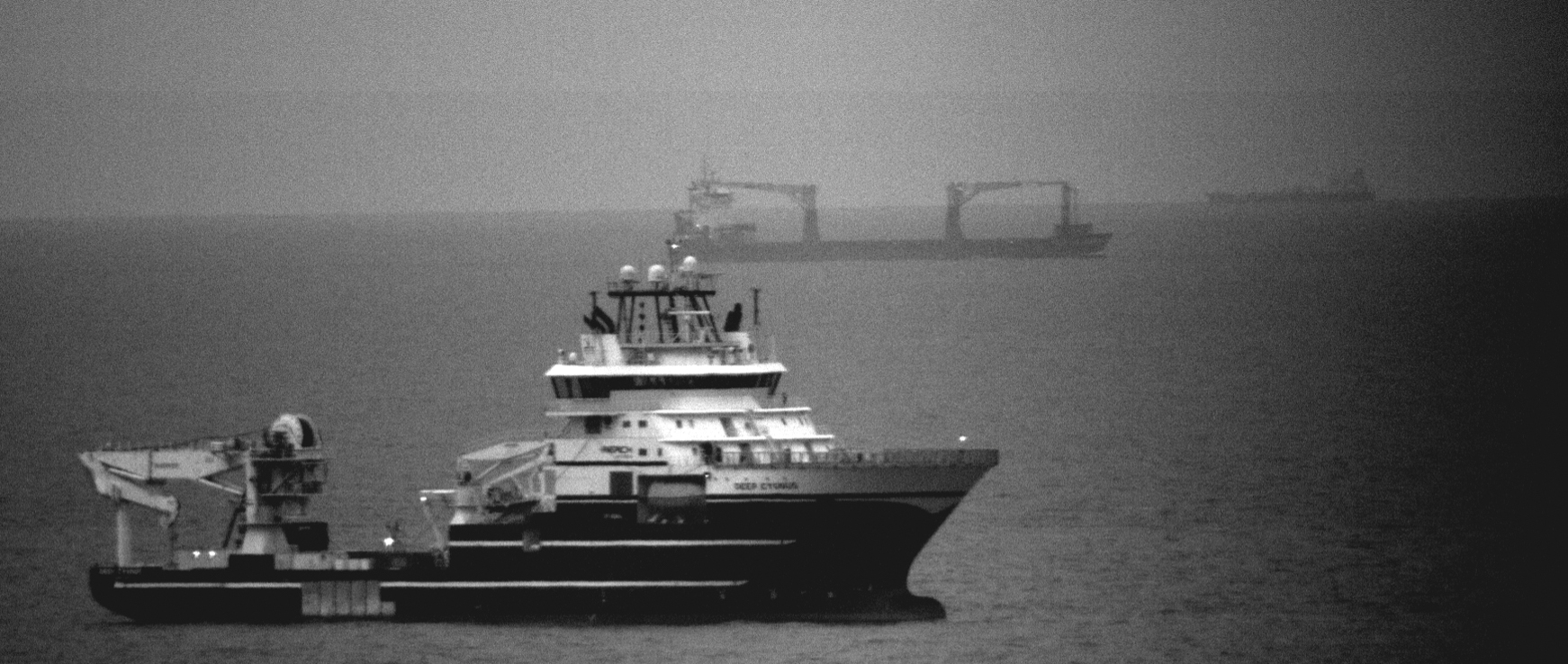
Figure 6: Three vessels captured in one field of view. The 122 m offshore support vessel is the foreground target, with the 146 m general cargo vessel and additional traffic visible in the background shipping lanes. DORI, DO and D for 6 km, ~15 km and ~25 km at dawn.
Key Findings
The original 10 km objective was met and exceeded.
Positive vessel identification was demonstrated on the 122 m offshore support vessel at approximately 5.8 km.
Recognisable commercial vessel imagery was obtained under maritime haze and dawn/twilight conditions.
Multiple vessels were captured in one field of view, demonstrating situational awareness rather than isolated target imaging.
The practical image limitation was dominated by maritime atmosphere, visibility and target contrast.
The trial was completed using commercial optics, manual focusing and direct image capture without Al enhancement or image stacking.
Conclusions
The Nightfall-HR trial successfully demonstrated practical long-range maritime imaging from the English Channel coast, delivering detailed vessel imagery and multi-target situational awareness under real dawn, twilight and coastal haze conditions.
The trial used a commercially available 130 mm Newtonian telescope, manual focusing and target acquisition, and direct-capture imagery without Al enhancement, image stacking or super-resolution processing. Despite this deliberately straightforward configuration, the system supported vessel observation, recognition and identification at operationally relevant ranges, while also capturing multiple vessels within a single field of view.
Performance was principally limited by haze, sea-path turbulence and reduced target contrast rather than detector sensitivity. The results support continued development of Nightfall-HR for maritime observation, coastal monitoring and long-range surveillance applications.
Future trials will use a structured test plan
incorporating time-synchronised image capture, AIS logging, environmental recording and a parallel SWIR imaging configuration.
Technical Notes
Commercial 130 mm aperture, 650 mm focal length, f/5 Newtonian reflector.
At the nominal 650 mm focal length and 4.6 micrometre sensor pixel pitch, the approximate angular sampling is 7.1 microradians per pixel before any display scaling or cropping.
Distances stated in the report are approximate and should be treated as field-trial estimates rather than calibrated range measurements.
References
1. VesselFinder vessel particulars: IMO 9479541, length overall 122.40 m.
2. VesselFinder/Marine Traffic vessel particulars: IMO 9369069, length overall approximately 145.63 m.